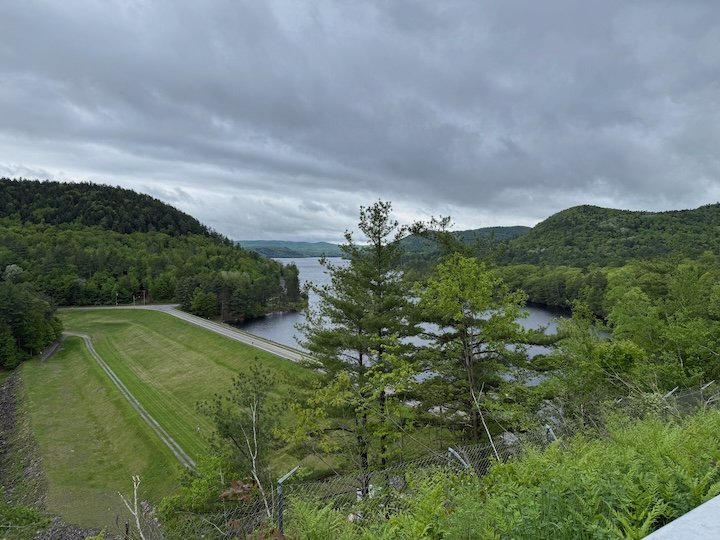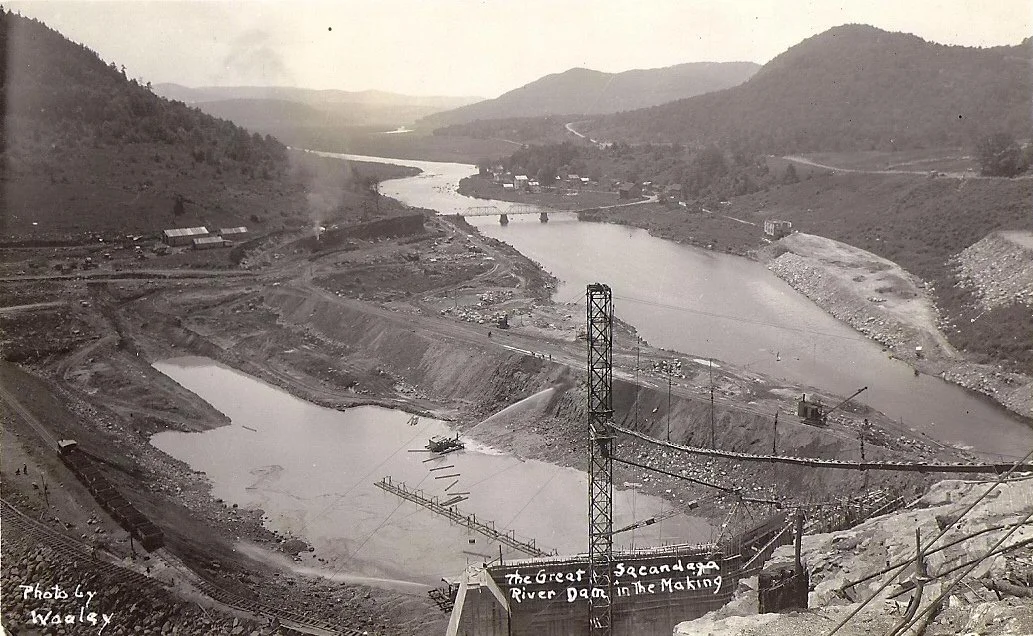
As with so many Adirondack communities, the historical event which defined Northville more than any other did not take place in Northville itself. In 1930, the Sacandaga River was dammed at Conklingville in the present Town of Hadley, tens of miles northeast of the Village of Northville. The true nexus of this monumental feat of engineering, however, lay south rather than north. The river was dammed in the first place to prevent downstream flooding on the Hudson River, particularly in the capital at Albany. In the early 1920s, the State of New York formed the Hudson River–Black River Regulating District to manage the waters of the basins formed by these rivers, and this public benefit corporation organized the construction and financing of the dam, which it still owns and regulates today.
The act was something of a re-creation rather than an original. State geologists in the late 19th and early 20th centuries had mapped a Glacial Lake Sacandaga that existed some 13,000 years ago as silt from the retreating Wisconsin Ice Sheet blocked the exits of mountain streams and filled the Sacandaga valley in much the same way that it is filled today. It was the same silting process that had caused the curve in the original Sacandaga River, diverting it northeast at Fish House. Previous to this, it flowed southward past modern-day Gloversville and into the Mohawk River. Erosion at Conklingville eventually allowed the water of this glacial lake to escape, until it was filled back up again thousands of years later by human engineers.