Anthropology at the Twilight of Empire
The old world is dying, and the new world struggles to be born: now is the time of monsters.
- Probably not Antonio Gramsci
As neoliberalism descended upon the world with the grim dawn of the 1980s, anthropologists turned to a preoccupation with immiseration that Sherry Ortner has termed dark anthropology, or “anthropology that focuses on the harsh dimensions of social life (power, domination, inequality, and oppression), as well as on the subjective experience of these dimensions in the form of depression and hopelessness.”
While there are problems with the denomination - not least the conflation of the bad with the dark, too easily extended from predicament to people - Ortner surely had her finger on the pulse of the discipline with the diagnosis, which has since been strangely reified by a near-fatal crisis of the journal in which she published it, followed by the tragic and untimely death of its progenitor. It was not so much that anthropologists had become depressed as that the world had become depressing. The science of humanity followed its subject matter into the Slough of Despond.
Anthropology has known ugly times before; indeed we were born of them. The long epoch of violent colonial conquest that began in the fifteenth century ultimately gave rise to the discipline itself toward the end of the nineteenth: an era which witnessed the subjugation, enslavement, displacement and ultimately mass extinction of tens of millions of people, particularly in the New World, as European capital deployed its first great assault of accumulation by dispossession. Anthropology was born of this grief, a project which set out to shine a light on corners of the world which were obscure to their conquerors, in so doing exploiting the pathways of imperial conquest that threatened to obliterate the difference it exposed and paving the way for further demolition to come.
Over the course of our history, we have tried to atone for this original sin by shifting our mission from documenting difference to explaining power to promoting justice. But we have never made much headway. The seas around us have changed even while we have struggled to chart a course against the prevailing wind of redundancy. As neoliberalism gives way to whatever comes next, the world is not bereft of data but awash with it. The injustice and iniquity that is the stuff of Ortner’s dark anthropology is not hidden but splashed across every newspaper, every day. For those who thought the road from discovery to revelation to justice straight and true, these are dark times indeed. In the age of the Mad King and his Redcaps, the most diabolical of human behavior – genocide, tyranny, brutalization – is met daily by indifference, denial, even sadistic celebration. It is not that we do not know. It’s that we do not, or cannot, care.
Through this narrative of exogenous brutality runs a disconcerting thread of nihilism. In contrast to the self-interested impulses so familiar to longtime theorists of capitalism, an acrid spirit of self-harm infuses this moment of imperial decay. It is here, in these hills where I was born, and it is far more entrenched and consequential than I imagined when I accidentally predicted the rise of the Redcaps some years ago. It shudders like some heaving beast in the undergrowth, in the angry political signs strung from double-wides, in our quiet despair of addiction, in the friend who shot himself to death in the shadow of a mountain. And it is back there, in the anthropology of the academy that exiles its own children and devours those who remain. The heart of darkness was always us.
And yet, I feel just as certain that there is more to darkness than this. The death of empires great and small, of nations and disciplines, leaves a rind of fecund rot: the quiet, roiling darkness of the womb, the wetland, the wild. This is the darkness of creation, of life going on after empire whether we will or no. What bastard fledgling it will bring forth remains to be excavated by the archaeologists of the future.
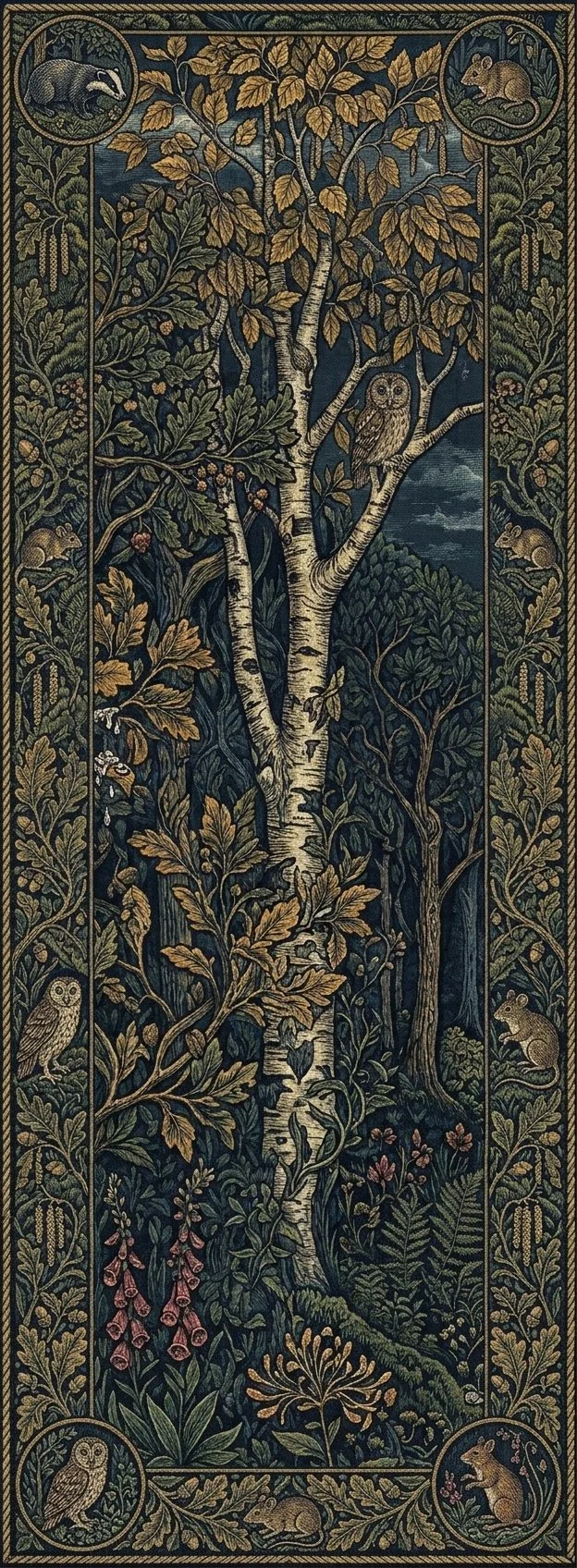
Notes and Queries on Anthropology (originally subtitled for the Use of Travellers and Residents in Uncivilized Lands) was an influential ethnographic fieldwork manual and standardized questionnaire developed in the late 19th century. It was designed to guide travelers, colonial officials, missionaries, and early scientists on how to systematically observe and record data about non-European societies across the British empire. It reflects the professionalization of the discipline, the standardizatin of its method and the scientific racism which bound them together.